

(Estimated Reading Time: 7 minutes)
Summary:
Want to be a pharmacist in Australia? You’ll need to pass the OPRA exam, which features 120 questions across a 2.5-hour session of pure clinical thinking. In 2026, the OPRA exam will continue to be your gateway; consequently, it’s important to understand everything about the OPRA exam 2026. Budget around AUD 3,355 in fees, but remember that the reward is an attractive salary of AUD 95K–115K/year. Furthermore, you can even take the exam right in Manila. Just don’t sleep on the paperwork, because one wrong move and you’re back to zero!
As of 2026, the Overseas Pharmacist Readiness Assessment (OPRA) is part of the APC Stream pathway for many overseas-trained pharmacists. If you’re preparing for the OPRA exam 2026, it’s important to know that compared to the previous KAPS format, the OPRA places a stronger focus on clinical reasoning and patient care concepts.
The transition from KAPS to OPRA reflects a broader shift toward clinically focused pharmacy assessment standards in Australia. Here’s what Filipino pharmacists need to know about the 2026 OPRA exam format! from fees, registration timelines, and eligibility process.
What is the OPRA Exam for Pharmacists in 2026?
The Overseas Pharmacist Readiness Assessment (OPRA) is now used within the Australian Pharmacy Council’s (APC) Knowledge Stream pathway for eligible overseas-trained pharmacists, replacing the retired KAPS format. This updated assessment framework is designed to better reflect modern clinical pharmacy practice in Australia, with a stronger focus on clinical reasoning and patient care concepts.
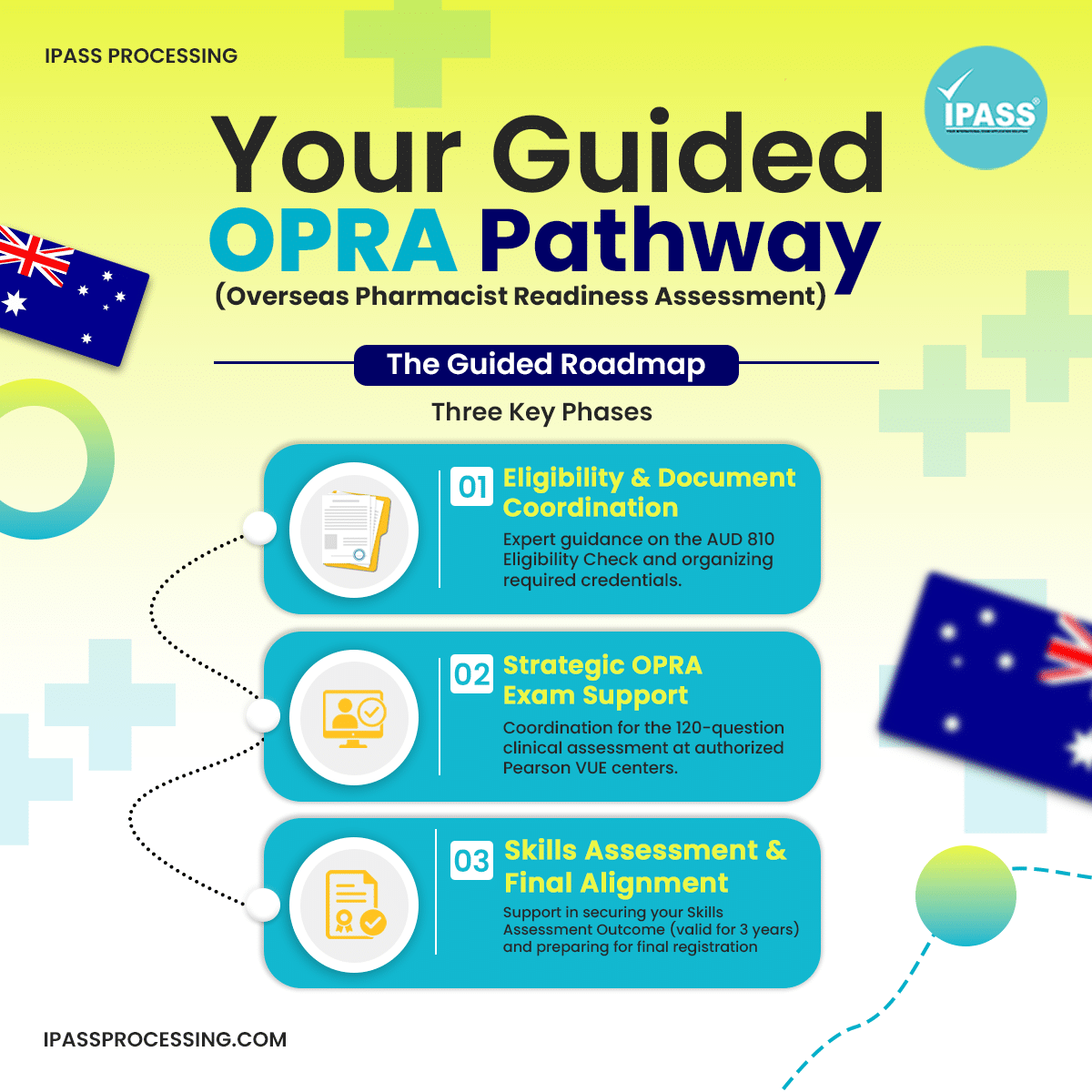
Here are some of the key features of the OPRA exam in 2026:
Fee Schedule
Fees are adjusted annually by the Australian Pharmacy Council (APC). For the 2026 cycle, the published costs include:
- Eligibility Check: AUD 810
- OPRA Exam Fee: AUD 2,245 per attempt
- Skills Assessment Outcome: AUD 300 (required after passing the exam)
Note:
Once issued, the Skills Assessment Outcome remains valid for three (3) years from the date results are released. Consequently, applicants who do not complete their registration or visa process within this validity period may need to repeat parts of the assessment process.
Exam Duration and Format
One of the major changes introduced with the OPRA framework is the streamlined exam structure. Instead of multiple sessions, the assessment is designed as a single paper examination focused on clinical reasoning, applied pharmacy knowledge, and patient care concepts.
2026 OPRA Exam Format
- Time Limit: 2 hours and 30 minutes (150 minutes).
- Total Questions: 120 multiple-choice questions
- Exam Delivery: Computer-based testing through authorized Pearson VUE centers
- Question Style: Questions are designed to assess clinical reasoning, therapeutic decision-making, and foundational pharmaceutical sciences
Important Notes About the Exam Structure
- Because the exam contains 120 questions within a limited time frame, time management remains an important part of preparation.
- However, candidates are not informed about the weighting or scoring structure of individual questions.
- According to APC guidance, the OPRA exam 2026 focuses more heavily on applied clinical understanding compared to the previous KAPS format.
- In addition, there are currently no scheduled breaks during the examination session.
- Please note that the 15 minutes of pre-exam activities aren’t counted toward the 150-minute timer, but candidates will be at the test center longer
Compared to the previous format, the OPRA structure is intended to provide a more streamlined and clinically focused assessment pathway for overseas-trained pharmacists.
OPRA Exam Content and Syllabus
Preparation for the OPRA Exam 2026 should focus heavily on clinical reasoning, patient care, and foundational pharmaceutical sciences. The assessment is designed to evaluate whether overseas-trained pharmacists can apply their knowledge in clinically relevant situations aligned with modern pharmacy practice in Australia.
According to the Australian Pharmacy Council (APC), the OPRA framework focuses on core areas commonly used in clinical pharmacy practice.
Core Domains Covered in the OPRA Exam:
- Therapeutics and Patient Care (45%)
- Focuses on clinical decision-making, case analysis, and patient-centered care.
- Pharmacology and Toxicology (15%)
- Covers drug mechanisms, adverse effects, interactions, and toxicological principles.
- Pharmacokinetics and Pharmacodynamics (10%)
- Includes absorption, metabolism, drug action, and interpretation of therapeutic data.
- Biomedical Sciences (20%)
- Covers subjects such as pathophysiology, microbiology, and immunology.
- Medicinal Chemistry and Biopharmaceutics (10%)
- Focuses on formulation principles, drug stability, and pharmaceutical chemistry concepts.
Tip for Filipino Pharmacists Preparing for OPRA
Candidates should focus more on clinical application and therapeutic reasoning rather than memorizing Australian pharmacy legislation. Based on APC guidance, the OPRA primarily evaluates foundational clinical readiness and pharmaceutical knowledge at this stage of the pathway.
Therefore, instead of relying purely on memorization, preparation should prioritize:
- case-based practice questions
- therapeutic decision-making
- patient safety concepts
- time management under exam conditions
Here’s something most Filipino pharmacists don’t realize until it’s too late
Knowing the OPRA content is only half the battle. In fact, most applicants who miss their exam window don’t fail the test, they never make it to the test. A rejected document, a missed registration deadline, or a miscalculated eligibility timeline ends the journey before it even begins. So ask yourself honestly, do you know exactly which documents the APC will flag, which deadlines close before you’re ready, and what happens if your eligibility check is still pending when registration opens? If any part of that question made you pause, that’s where IPASS Processing comes in.
2026 Implementation & Deadlines
Registration for the 2026 OPRA Exam is strictly managed through the APC portal. For 2026, the primary windows are:
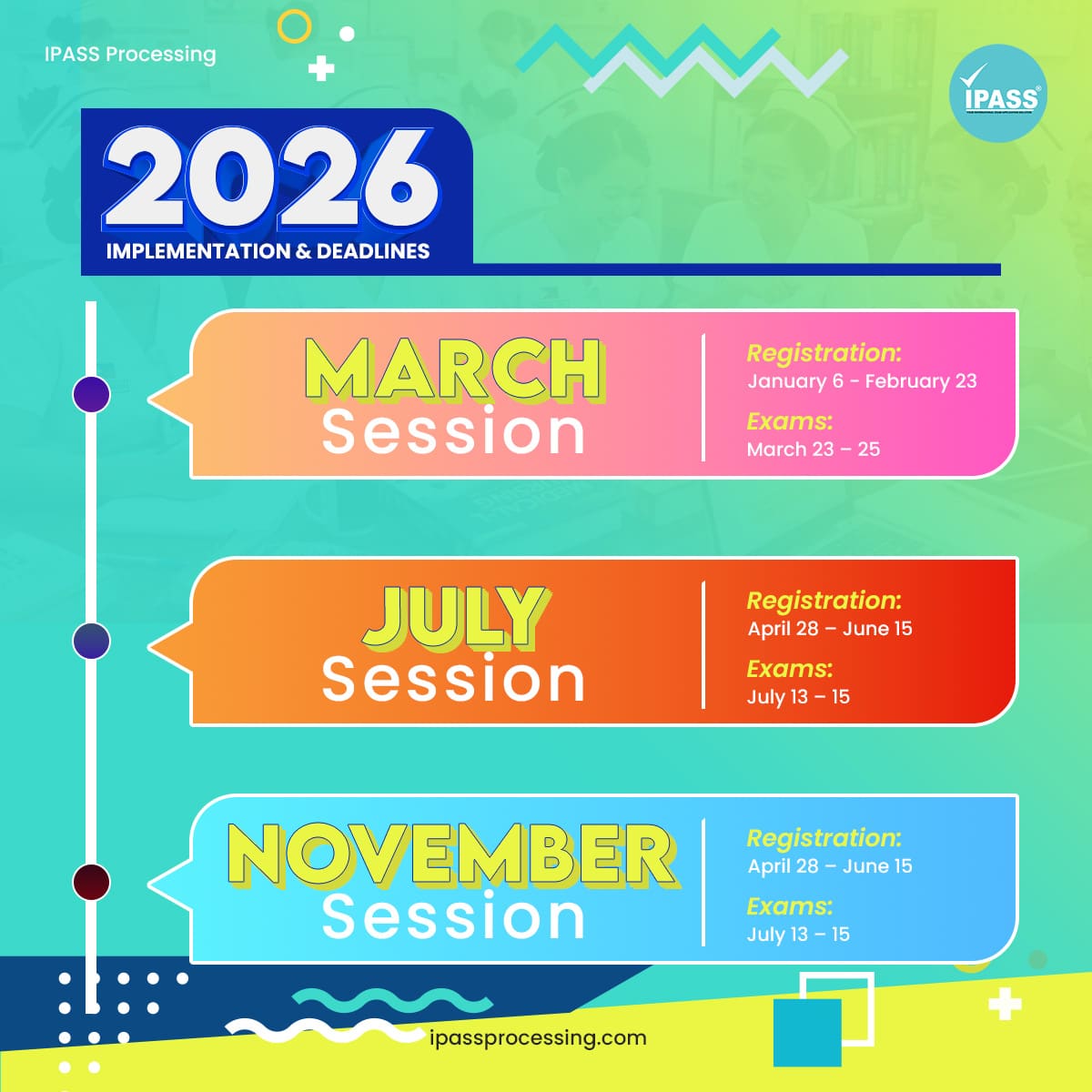
To check for real-time seat availability or changes this 2026, visit the official APC Exam Information Page.
Essentially, this timeline represents a dual-track strategy. While the candidate masters the Therapeutics weight of the new 2026 syllabus, while IPASS Processing ensures the administrative framework remains compliant with the Australian Pharmacy Council’s (APC) latest protocols.
By doing so, you can align your study plan with these specific domains and staying ahead of the APC’s firm registration deadlines, you set a solid foundation for a successful transition to your new career.
Where to Take the OPRA Exam in the Philippines
Can you complete your OPRA examination without leaving the country? For the 2026 windows, authorized Pearson VUE testing centers for the Australian pathway are available in:
- Philippines: OPRA testing is available through authorized Pearson VUE testing centers in Manila.
- Booking Note: Because these centers serve multiple professions, seats for the March, July, and November OPRA windows fill up fast. Therefore, it is best to book your slot as soon as your Eligibility Check is approved.
Important 2026 Reminders:
- Testing Centers: Filipino pharmacists can sit the exam at accredited Pearson VUE centers in Manila.
- Eligibility Check: You must complete your Skills Assessment/Eligibility Check before you can book an exam seat. It is recommended to start this process at least 8 weeks prior to the registration closing date.
- Scoring Model: OPRA uses the Rasch Model, which provides a Pass/Fail result based on your demonstrated ability across different question difficulties.
What is the Rasch Model?
Unlike the previous KAPS exam or the Philippine Board Exam, OPRA does not use a simple raw percentage to determine success. Instead, it uses the Rasch Model, a psychometric system that measures your actual ability level.
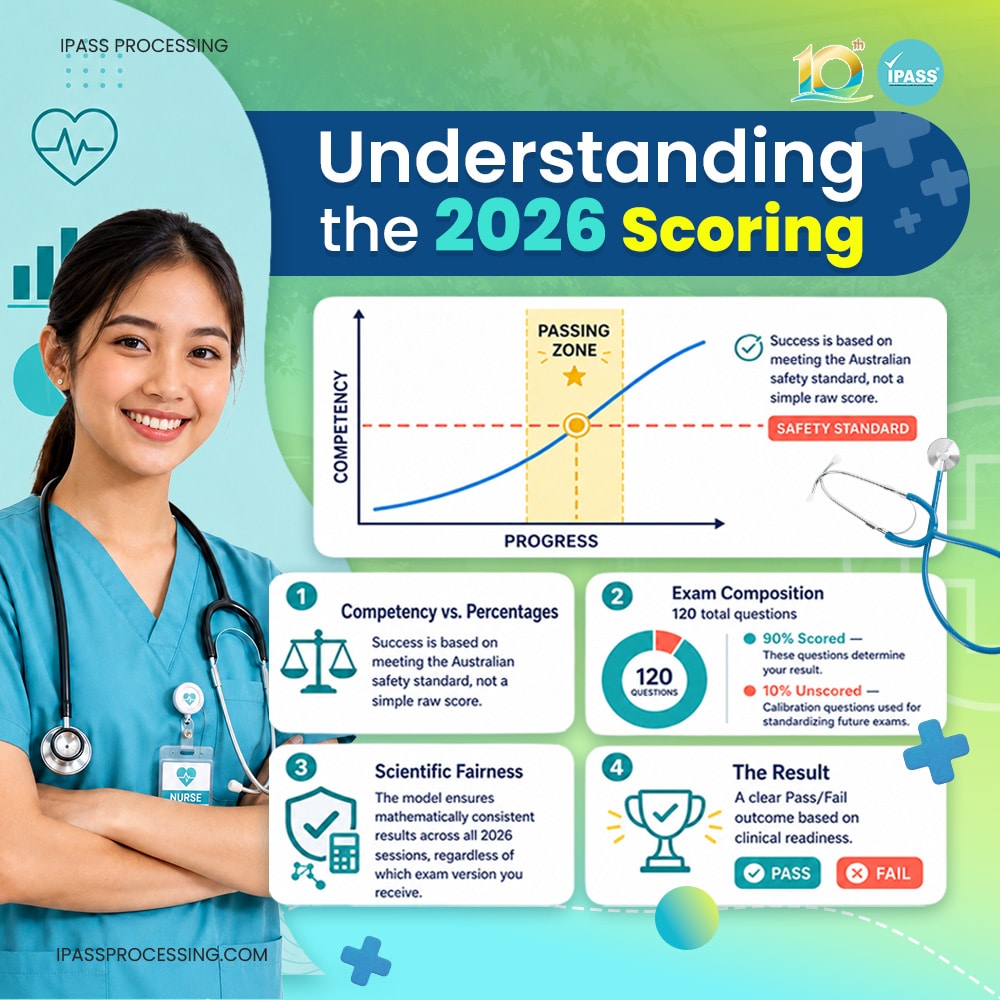
To understand more about the OPRA exam 2026 scoring, visit the official website of Australian Pharmacy Council (APC) Exam Information Page.
- Ability vs. Difficulty: The model evaluates your performance by comparing the difficulty of the specific questions you answered correctly against a predetermined “passing standard” of competence.
- Pass/Fail Outcome: You will not receive a numerical grade; you will be notified of a Pass/Fail result based on whether your demonstrated ability meets the safety and clinical requirements for Australian practice.
- Scientific Fairness: This model ensures that even if different candidates receive slightly different versions of the exam, the standard for “passing” remains mathematically consistent across all 2026 sessions.
Salary of Pharmacists in Australia: 2026 Outlook
Australia continues to offer competitive salary opportunities for pharmacists, particularly in regional and workforce-shortage areas. However, compensation levels vary depending on registration status, years of experience, employer type, and geographic location.
Still on the fence? Let the numbers speak. Based on current Australian market benchmarks, pharmacist salaries commonly range around AUD 95,000–115,000 annually depending on experience, employer, and location. You can verify these factual occupation profiles and national demand data on the official Jobs and Skills Australia portal.
Market Benchmarks for 2026
- National Average
- The estimated salary range for registered pharmacists in Australia commonly falls between AUD 95,000 to AUD 115,000 per year, depending on experience level and employment setting.
- Regional Loading
- Factually, regional and remote areas (classified by the Modified Monash Model) often offer higher base salaries—sometimes exceeding $130,000 AUD—to address workforce shortages.
- Career Progression
- Salaries are stratified by experience level. For instance, entry-level practitioners typically begin at a lower tier (approx. $75,000 AUD), while Pharmacist Managers and specialized Clinical Pharmacists reach the upper percentiles of the pay scale.
To review the legal minimum pay rates and employment conditions governed by the 2026 Pharmacy Industry Award, you may visit the official Fair Work Ombudsman website.
Key Factors Influencing Salary
- Registration Status: Applicants must complete the OPRA pathway and meet AHPRA registration requirements before becoming eligible for full registered pharmacist salary classifications.
- Practice Setting: In addition, salaries vary between Community Pharmacy, Public Hospital Pharmacy, and Private Hospital Pharmacy, each operating under different state-based or national enterprise agreements.
- Location: Metropolitan areas such as Sydney, Melbourne, and Brisbane often have higher living costs and stronger job competition. In contrast, regional locations may provide higher compensation packages and additional workforce incentives.
To check for real-time seat availability, registration windows, or lifestyle standards for international pharmacists this 2026, visit the official APC Exam Information Page.
These figures demonstrate that regional areas often offer higher compensation to attract international talent. While salaries are attractive, Filipino pharmacists should also consider the cost of living in their chosen city to get a complete picture of their potential savings.
Requirements for OPRA Eligibility 2026
To begin your Skills Assessment/Eligibility Check (the AUD 810 phase), applicants are commonly asked to prepare documents such as:
Proof of Identity
- Valid Passport: The bio-data page must be clear and currently valid.
- Secondary ID: Additional identification documents may also be requested for verification purposes
- Birth Certificate: A clear color scan of your original birth certificate.
- Note: If your names do not match exactly across these documents (e.g., due to marriage or clerical errors), you must consequently provide a Marriage Certificate or an official “Same and One” letter.
Educational Qualifications
- BS Pharmacy Diploma
- Transcript of Records (TOR)
Registration (Optional)
- PRC Board Certificate: Proof that you are a Registered Pharmacist (RPh) in the Philippines.
- PRC License (ID Card): Must be current and not expired.
- Certificate of Good Standing (COGS): Issued by the PRC, proving you have no pending disciplinary cases.
How IPASS Can Help with Your OPRA 2026
Navigating the OPRA pathway involves multiple administrative and documentation steps, because this includes assessment, registration timelines, and supporting document preparation. For many overseas-trained pharmacists, structured guidance can help reduce delays and improve application readiness.
IPASS Processing provides administrative assistance for eligible applicants throughout different stages of the OPRA exam 2026 application process, specifically featuring:
1. Document Preparation Guidance
Assistance in organizing commonly requested documents for eligibility assessment and registration requirements.
2. Application Process Support
Guidance on submission flow, timelines, and required documentation based on the current APC pathway.
3. Status Monitoring Assistance
Support in tracking application progress and helping applicants stay updated on pending requirements.
4. Administrative Coordination
Assistance in helping applicants prepare for different stages of the process, including document alignment and application follow-up.
5. Personalized Application Guidance
Support tailored to the applicant’s individual background, registration status, and pathway concerns.
Important Disclaimer:
IPASS Processing assists with administrative and application-related support only. IPASS does not administer, conduct, or officially represent the OPRA examination or the Australian Pharmacy Council (APC).

Frequently Asked Question about OPRA Exam
- Who is eligible for the OPRA exam in Australia?
Eligibility depends on the Australian Pharmacy Council’s assessment of your qualifications and pathway eligibility under the Knowledge Stream process.
- How to pass the Opra exam?
Success requires prioritizing the Patient Care and Therapeutics section and mastering clinical reasoning within the 75-second-per-question time limit.
- How many times can I take the Opra exam?
There is no official limit on the number of attempts you can make, provided you pay the full exam fee for each registration.
- What is the pass mark for OPRA?
There is no fixed percentage; instead, the Rasch Model determines a pass or fail result based on your ability to answer questions of varying difficulty.






Leave a Reply